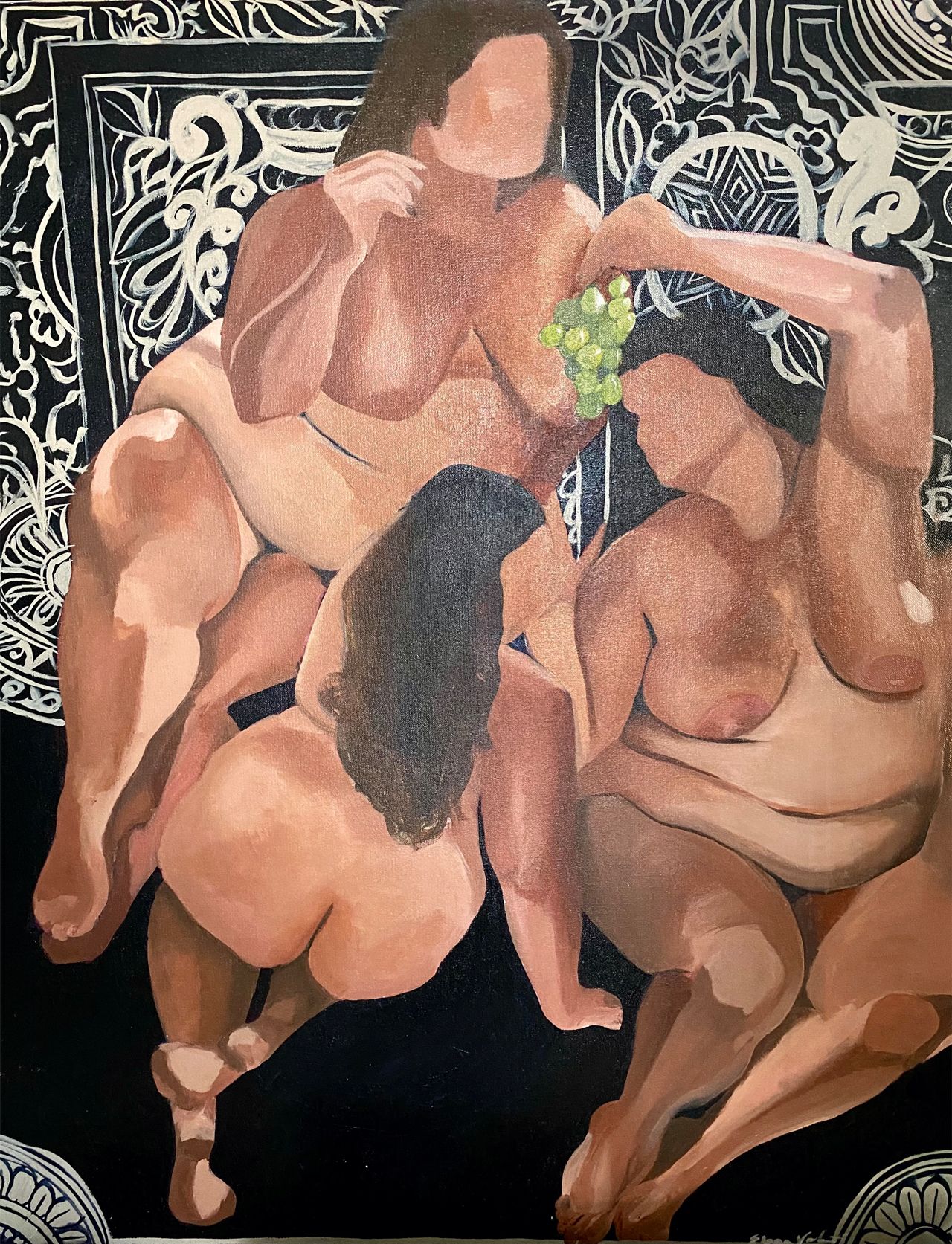
Growing up in the Noughties, hating fat — and in turn fat people — was normal. People on TV said it in punchlines, magazines said it in headlines and my mother said it about herself. It was embedded. So the author spent youth full of anger towards a bigger body.
Then, in early 20s, all of that changed. Or at least it felt like it did. Fat liberation eked into the mainstream and suddenly self-worth seemed achievable. The author remembers fat fashion blogging in the early 2010s and the niche corner of Livejournal that introduced the term “body positivity”.
It felt novel but of course the concept wasn’t new. Long before social media got its hands on it, fat liberation was an organised political movement. Its roots are often traced back to the late 1960s in America; however the groundwork was being laid throughout the 1950s as post-war diet culture exploded and thinness became increasingly tied to morality, desirability and social value.
От активизма к мейнстриму
As magazines pushed calorie-counting and suburban femininity, fat people were presented as gluttonous, lazy and undisciplined; increasingly, they were treated as a societal failing. In response to this, activists — predominantly women, queer people, people with disabilities and Black feminists — began pushing back against the idea that being fat was inherently shameful.
There were also some key male voices in the mix. In 1967, writer Llewellyn “Lew” Louderback published an article in the Saturday Evening Post titled “More People Should Be Fat”. It was a rebuttal to the discrimination he and his wife faced for being fat but also a diatribe against the wider anti-fat narrative. He argued that without society’s bias against fat people and the extremes to which diet culture pushes them in the pursuit of thinness, more people would simply be fat and content with it.
The article became a catalyst for a growing movement. That same year, 500 people gathered in New York’s Central Park for what became known as the “Fat-In”. Protesters burned diet books, they carried signs reading “Fat Power” and they ate ice cream in direct opposition to the shame attached to fat bodies. Two years later, in 1969, another man, Bill Fabrey, enraged at the anti-fat rhetoric levied at his wife, founded the National Association to Aid Fat Americans, which would later become the National Association to Advance Fat Acceptance. This was one of the first major organisations dedicated to fighting size discrimination in employment, healthcare and public life.
As the movement evolved globally it reshaped fat liberation into something broader than merely “feeling good” about your body. It became intertwined with queer feminism, for instance. Fat activism was happening in lesbian bookstores, feminist reading groups and underground zine culture, and this was led primarily by queer women and Black women, who understood body policing as part of a wider system of patriarchal control.
Политика тела и язык самопринятия
Publications such as Fat! So? by Marilyn Wann and Fat Girl, “a zine for fat dykes and the women who want them”, treated fatness not as something for which to apologise but as something political, sexual and visible. The phrase “body positivity” — before it was diluted by brands into generic self-love messaging — was rooted in activism by marginalised people speaking about survival in bodies that society deemed unacceptable.
Writers and activists including bell hooks, Audre Lorde and, much later, academics such as Carlie Pendleton and Sabrina Strings explored how anti-fatness is deeply entangled with everything from racism and colonialism to homophobia and misogyny. In her 2019 book, Fearing the Black Body: The Racial Origins of Fat Phobia, Strings traced how Western ideals of thinness emerged alongside anti-Blackness, where fatness became racialised as “primitive”, excessive and lacking control, in contrast to white European ideals of purity and restraint.
Learning about the history of the fight against the marginalisation of fat people radicalised the author. She built her career around it: writing essays, creating her own zine, attending fat liberation events and eventually, in 2025, writing a book, Greedy Guts, about how fat-shaming and fat acceptance had shaped her life in equal parts.
And just a few short years ago, it felt as though things were moving in the right direction. Plus-size clothing became more accessible. Bigger bodies appeared on billboards and magazine covers; brands rushed to align themselves with body positivity. Of course this was commercialised and commodified, and the message was diluted, but at least there was visibility. Fat women were no longer hidden or shown only as cautionary tales. They were aspirational. Stylish. Sexy. Confident.
Откат от бодипозитива
But anything that becomes too mainstream tends to provoke a revolt at the other end of the spectrum. The opposition to wokeness, body positivity included, became a form of counterculture. Fat-shaming crept back alongside the growth of alt-right politics since Donald Trump’s first presidential win in 2016. It is hard to think it is a coincidence that as the world becomes politically more hostile, exclusionary and punitive, bodies are increasingly expected to reflect discipline, control and obedience.
The shift is also tied to Covid. The pandemic made people prioritise health and, with fat-shaming already increasing across communities and political allegiances, it was easy to find an enemy in fat people, who have historically been linked to poor health. This exploded when a medical “solution” to fatness became widely accessible — well, if there is a spare few hundred pounds a month to spend on injectables. The proliferation of GLP-1 drugs has framed excess weight as a problem to be treated, like someone with asthma needing a pump. Adverts adopt a sort of girl-boss vernacular to promote the medications and promise better mental health alongside weight loss.
Now, a whole new language — and silence — around bodies has developed. From the very fat to the very thin, there is a silken web of “choice feminism” that entraps anyone who dares to speak out against the extreme body changes seen in peers and celebrities. The language is a flowery co-opt of self-love rhetoric, wrapped up in wellness jargon. The fact is bigger bodies are seen as the enemy and there is little or no nuance around fat.
During the body positivity years, activists, influencers and writers like the author made progress in changing the public consciousness. Questions were raised: is thin always healthier? Are fat people automatically unhealthy? Why is poor health seen as a mark against a person’s character? Today it is increasingly difficult, as a fat woman, to be able to explore complicated feelings towards thinness being “in” without potentially upsetting someone who has caved to societal pressures to be thin.
Things looked a little different in 2020. The author had all the time in the world, a wardrobe of silly outfits that could not be worn anywhere, a ring light and a dream. She decided to try to become an Instagram body influencer. Alongside posed, lightly Facetuned images, lengthy captions about her relationship with her body began to appear. Musings — half positive, half negative — went up about experiences as a fat woman, someone who felt hyper-aware of her body on and offline, and the nuances surrounding sharing images of that body with the internet. It was not too far off what had been written for the last eight years, just condensed into social media captions.
But after about six months, the author stepped away from Instagram. She felt emotional turmoil every time she sat to type 200 words on why it was revolutionary to wear jeans that put her VBO (visible belly outline) on show. Despite discomfort with being an influencer, there was undeniably a wider cultural softness around fatness at the time. Even if imperfect. Even if commercial. Even if shallow.
Куда исчезла «aspirational fat woman»
Six years on, body influencers are everywhere. Except many plus-size influencers have converted to becoming weight-loss influencers instead. The aspirational fat woman has quietly disappeared and in her place is the woman documenting her transformation away from fatness. The “before” and “after”. The shrinking body. The “health journey”. The world has not just moved on from body positivity — it has rebelled against it.
What happens next for fat women? Fat activists? The author? Knowing the history of the movement, and that fat liberation has peaked when traditionalism takes hold of the mainstream, makes her feel confident that another uprising against thin beauty standards is around the corner. It has long been accepted that feminism comes in waves and it seems body positivity does too. While waiting, there is solace in being countercultural in a time when culture is skewing heavily to the right.
“The aspirational fat woman has quietly disappeared.”